


In a move to improve accessibility, the government has announced that all new trains ordered by Great British Railways (GBR) should, where possible, provide level boarding as standard.
When trains have level boarding, passengers with disabilities, mobility difficulties, and anyone requiring assistance find travelling by train so much easier.
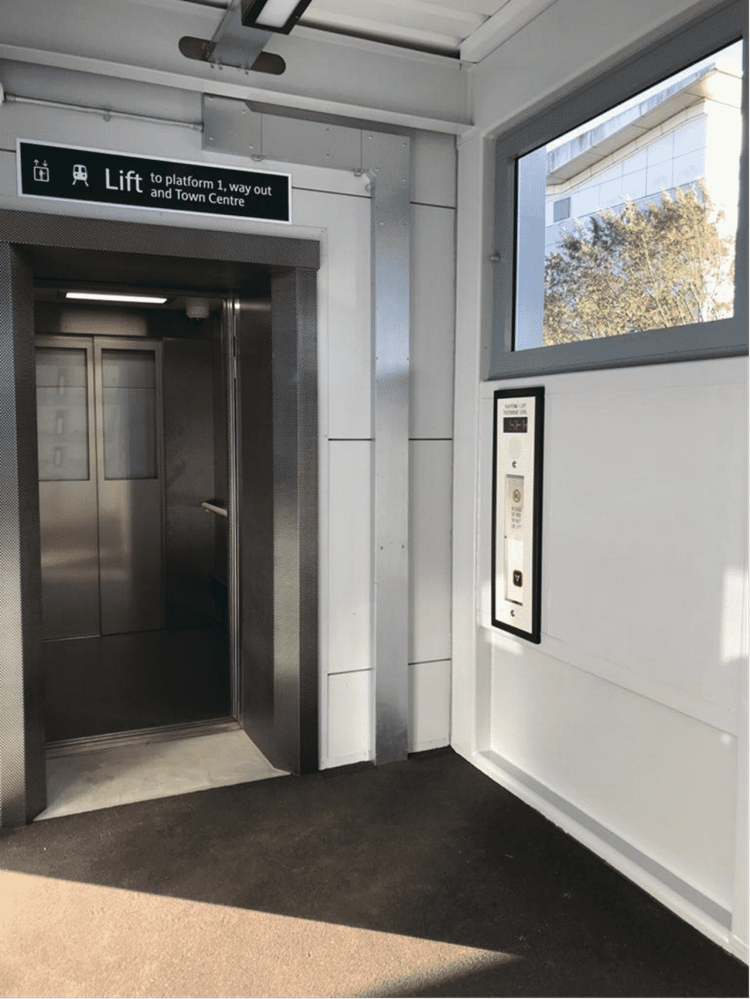
The announcement confirms GBR’s commitment to improve accessibility across the rail network. As part of that commitment, GBR is currently investing £ 280 million in step-free access at stations through an ‘Access for All’ programme.
Over 30 stations are currently being upgraded with Access for All improvements across England, Scotland and Wales. These include Flowery Field, Newton-for-Hyde, Levenshulme, Davenport, Woodsmoor and Bredbury in Greater Manchester.
Last year, and before the establishment of GBR, a ‘Roadmap to an Accessible Railway’ set out the improvements required in day-to-day travel arrangements for passengers needing assistance.
It is not expected that the requirements will add significantly to the cost of new trains, as the requirement for unassisted level boarding at standard Network Rail platform heights will be part of the initial design.

These requirements have already been implemented on new trains for Greater Anglia and Merseyrail, in new GBR trains being built by Alstom for the Transpennine Route Upgrade, and on 69 electric and battery-electric trains to be ordered by ScotRail.


Responses
I’ve never understood why this isn’t the case already. I know they are dealing with Victorian infrastructure in many places, as well as a legacy of different train companies owning different lines, but since then we have had British Railways, and a more enlightened environment around accessibility. They managed to decide on a common gauge for the tracks and a standard loading gauge, so surely a common platform/carriage height isn’t rocket science?
I also don’t understand why so many railway stations are built of curves, creating an unnecessary gap between the platform and the train. Mutter, mutter, mutter.